SCIENCE-BASED • DEVICE-INDEPENDENT
Microneedling Education for Licensed Estheticians
Understand the skin. Make better treatment decisions. Get better results.
A biology-first approach that goes beyond depth charts, device settings, and one-size-fits-all protocols.
Monika Sadar, PhD
Esthetician • Educator • Founder, Skinstetika Academy

Microneedling is not just skin needling.
It is wound healing.
Microneedling may look like a technical procedure.
Choose a cartridge.
Choose a depth.
Perform your passes.
Apply post-care.
But the treatment response does not happen in the device.
It happens inside the skin.
Microneedling creates a controlled micro-injury, followed by inflammation, repair, and remodeling.
And that means your results are influenced by far more than the number displayed on your pen.
- Barrier condition
- Inflammation
- Pigment risk
- Skin thickness
- Healing capacity
- Treatment intensity
- Technique
- Post-care
When you understand what the skin is actually doing, your treatment decisions change.
The device starts the process.
The skin creates the response.
I don’t teach microneedling as a collection of settings.
I teach you how to think about the skin you are treating.
Understand the biology
Learn what happens during inflammation, repair, and remodeling – and why those processes matter for your treatment results.
Assess before you needle
Evaluate barrier condition, inflammation, sun exposure, pigment risk, healing history, and whether the skin is actually ready for treatment.
Treat with intention
Adapt depth, technique, treatment intensity, and treatment planning to the client in front of you instead of relying on a one-size-fits-all protocol.
Assessment first. Depth second.
There is a reason I believe so strongly in microneedling.
We actually have evidence that it works.
The beauty industry is full of devices, treatments, and products supported by impressive marketing.
Microneedling is different.
It is one of the aesthetic procedures with a growing body of scientific research supporting its use for indications such as skin rejuvenation, atrophic acne scarring, selected pigmentation concerns, and other treatment goals.
That is exactly why I believe estheticians should understand it deeply.
Not because microneedling is something to be afraid of.
But because a treatment with real biological effects deserves more than superficial training.
Microneedling can create beautiful results.
Great results require more than a pen and a protocol
Knowing the steps does not always mean knowing what to do.
Maybe you already learned how to perform microneedling.
You know how to assemble your device.
You know the recommended depths.
You know the basic protocol.
But then a real client sits in front of you.
And suddenly the questions become more complicated.
How do I know if this skin is actually ready for microneedling?
Should I use the same depth on every area of the face?
What if the client has thinner, more reactive skin?
How should pigmentation risk influence my treatment?
How much inflammation do I actually want to create?
When is a treatment too aggressive?
Why did two clients respond differently to the same protocol?
Those questions cannot be answered by a depth chart alone.
They require an understanding of the skin.
ONLINE EDUCATION
Microneedling PRO
Science-based online microneedling education for licensed estheticians who want to move beyond memorized protocols.
Microneedling PRO was created to help you understand not only how to perform microneedling, but why you make each treatment decision.
Inside the program, we connect skin biology, wound healing, anatomy, client assessment, technique, treatment planning, ingredients, indications, and complication prevention.
So instead of asking:
“What depth do I always use?”
you begin asking:
“What does this specific skin need today?”
Move from protocol follower to confident treatment decision-maker.
Inside Microneedling PRO, you will learn how to:
- Understand the biological mechanisms behind microneedling
- Connect inflammation, repair, and remodeling to treatment outcomes
- Assess whether a client is an appropriate candidate
- Evaluate barrier readiness and inflammatory status
- Recognize factors that may increase pigmentation risk
- Understand facial anatomy and regional differences in skin thickness
- Select treatment depth based on indication, anatomy, and individual skin characteristics
- Adapt technique and treatment intensity
- Understand the role of needle configuration and device mechanics
- Choose appropriate ingredients used alongside microneedling
- Develop treatment plans for rejuvenation
- Approach atrophic acne scars more strategically
- Understand microneedling for selected pigmentation concerns
- Understand its role in selected hair-loss indications
- Recognize complications and know when treatment should be modified, postponed, or avoided
Less guessing.
More understanding.
Better treatment decisions.
This is not device-company training.
I use different microneedling devices in my own practice.
And one of the most important things I have learned is this:
The brand of your pen is rarely the most important factor determining your result.
A microneedling device provides the mechanical movement of the needles.
But your treatment outcome is also shaped by:
- needle quality
- skin assessment
- skin tension
- hand pressure
- movement
- technique
- treatment intensity
- depth selection
- endpoint assessment
- and the client’s individual healing response
I do not sell microneedling devices.
I do not need to convince you that one particular pen is the answer to every treatment problem.
My goal is different.
I want to teach you how to understand the skin – so you can make better decisions regardless of the device in your hand.
MEET YOUR EDUCATOR
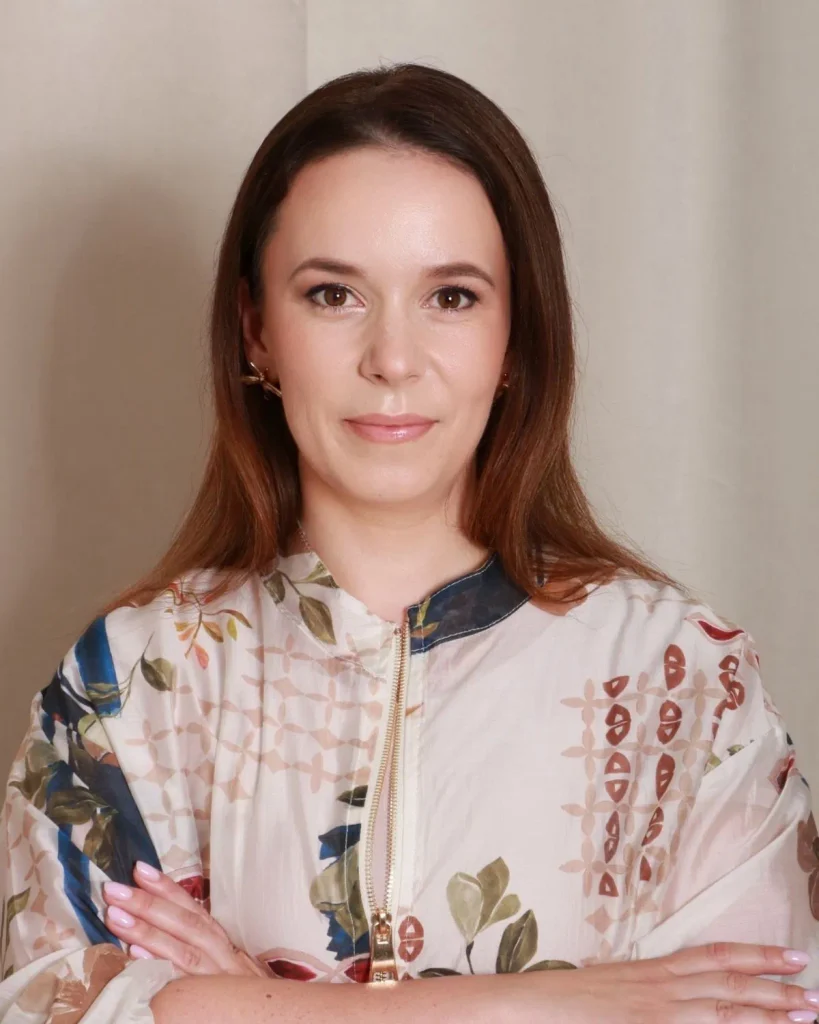
Hi, I’m Monika Sadar, PhD.
I’m an esthetician and educator based in Slovenia, Europe. Before creating Skinstetika Academy, I spent years working in aesthetics and teaching cosmetic subjects.
What I eventually realized was that following a technically correct protocol did not always mean it was the right treatment for the skin in front of me.
So I started asking more questions.
Why does one client respond beautifully while another develops prolonged inflammation?
How much injury do we actually need to create?
How should barrier condition change our treatment?
Those questions changed the way I practice microneedling – and eventually, they changed the way I teach it.
Today, my approach to microneedling is simple:
Biology first. Protocol second.
FREE DOWNLOAD
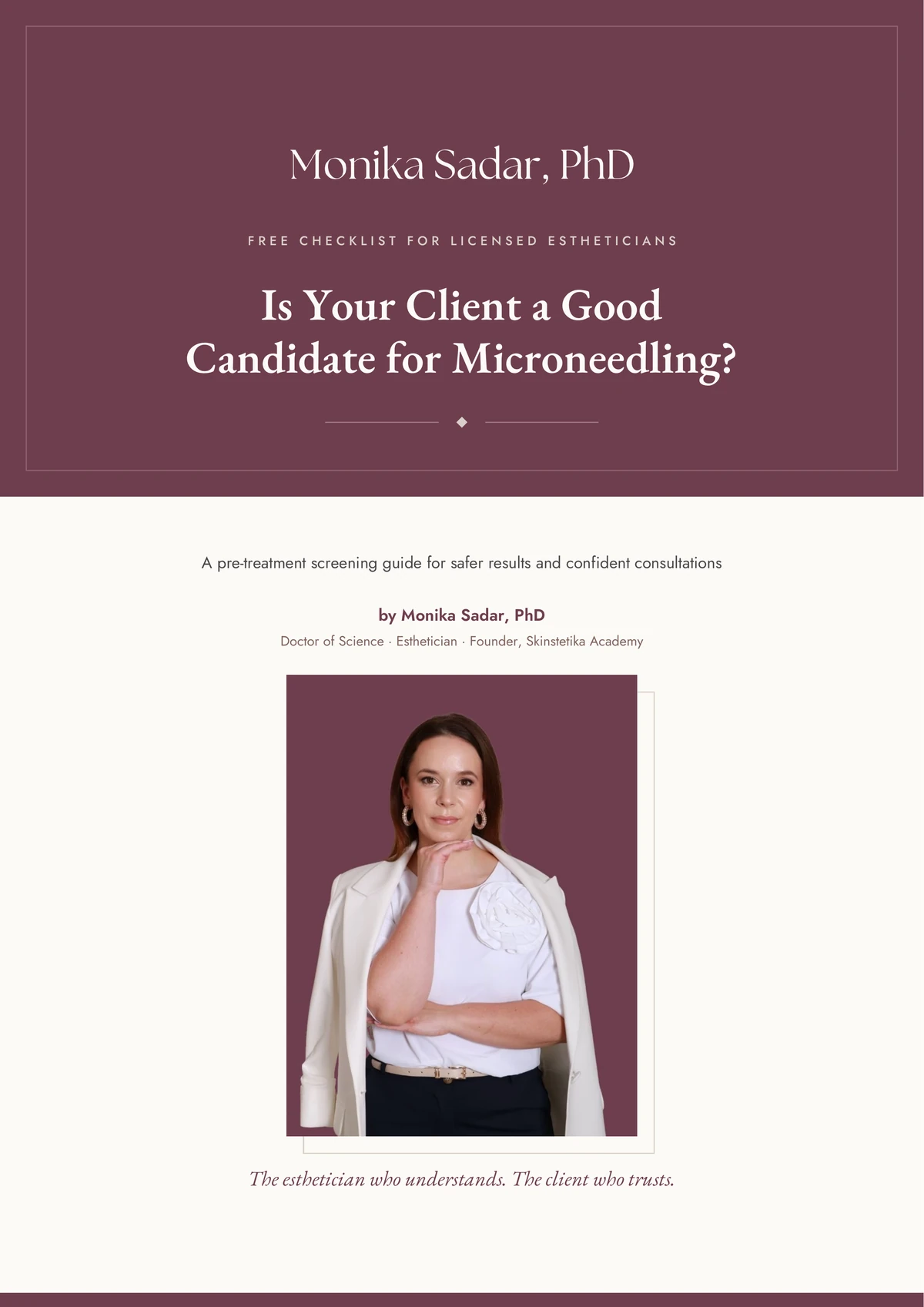
Before you choose the depth, assess the skin.
Get my free Microneedling Candidate Checklist.
Use it during your consultations to think beyond the basic contraindication list and evaluate factors including:
- barrier readiness
- inflammation
- recent sun exposure
- pigmentation risk
- medications
- healing concerns
- treatment expectations
- overall candidate suitability
Free download delivered to your inbox.
FREE ONLINE TRAINING
Needle depth is not microneedling expertise.
Join me for a free online microneedling class where we go beyond depth charts and look at the clinical thinking behind better treatment decisions.
You’ll learn why wound healing, skin condition, inflammation, pigment risk, and individual healing capacity matter — and how understanding them can change the way you approach microneedling.
Want to understand microneedling more deeply?
Explore science-based articles and educational resources created for estheticians who want to understand what is happening beneath the surface of the skin.
Microneedling Depth: Why Deeper Doesn’t Always Mean Better
How anatomy, indication, and tissue response should influence your treatment decisions.
What Actually Happens in the Skin After Microneedling?
A closer look at inflammation, repair, and remodeling.
00
Microneedling and Pigmentation Risk
Why inflammation matters when treating clients prone to post-inflammatory hyperpigmentation.
00
I believe estheticians deserve education that teaches them how to think – not just what settings to use.
Because the more you understand the biology of the skin, the less you have to rely on guesswork.
And when your treatment decisions become more intentional, microneedling becomes much more than a procedure.
It becomes a treatment you truly understand.
Ready to go beyond protocols?
Learn the science, clinical reasoning, and treatment strategy behind microneedling.