FREE ONLINE MICRONEEDLING TRAINING FOR LICENSED ESTHETICIANS
Needle Depth Is Not Microneedling Expertise
Learn what actually shapes a microneedling treatment — beyond depth charts, device settings, and generic protocols.
In this free training, you’ll learn why wound healing, skin condition, inflammation, pigment risk, and treatment intensity should influence the way you approach microneedling.
Choose your session
Select a time that works for you and register below.
By registering, you’ll receive access to the training, webinar reminders, replay information, and a short follow-up sequence about Microneedling PRO, including a limited-time offer. You can unsubscribe at any time.
Free online training with Monika Sadar, PhD
Esthetician • Educator • Founder, Skinstetika Academy
If microneedling expertise were just about choosing the right depth, we wouldn’t have so many conflicting depth charts.
And yet, this is often how microneedling is taught.
Choose a depth.
Perform a certain number of passes.
Look for a specific endpoint.
Repeat.
But real skin does not fit neatly into a chart.
Two clients may have the same treatment goal and still require very different treatment decisions.
One may have thin, reactive skin. Another may have a stronger barrier. One may have recent sun exposure. Another may be prone to post-inflammatory hyperpigmentation. One may tolerate treatment beautifully. Another may develop much more inflammation from the same protocol.
The number on your device is only one part of the treatment.
The skin in front of you matters more.
Microneedling is not just skin needling.
It is wound healing.
Your device creates a controlled micro-injury. But the treatment result develops afterward.
The skin responds through inflammation, repair, and remodeling.
That response can be influenced by:
- barrier condition
- baseline inflammation
- skin thickness
- pigmentation risk
- treatment intensity
- pressure
- technique
- number of passes
- recent UV exposure
- healing capacity
- post-treatment care
The device starts the process.
The skin creates the response.
Once you understand that, microneedling starts to look very different.
Inside this free training, we’ll cover:
1. Why microneedling should be understood as wound healing
Microneedling creates a controlled micro-injury. What matters is what happens next: the skin’s inflammatory, repair, and remodeling response.
2. Why deeper does not automatically mean better
More injury does not automatically mean more collagen, better remodeling, or better results. Depth should make sense for the anatomy, the indication, and the response you are trying to create.
3. Why candidate assessment comes before depth selection
Before asking “How deep should I go?” first ask: “Should I treat this skin today?”
- barrier readiness
- active inflammation
- recent sun and UV exposure
- pigmentation risk
- current skincare
- healing history
- treatment expectations
4. Why technique matters more than most estheticians realize
The number on the device does not tell the whole story. Hand pressure, skin tension, movement, number of passes, treatment area, and anatomy all influence what actually happens in the tissue.
5. How to start thinking beyond protocols
Protocols can be useful. But they should not replace understanding.
Instead of always asking “What depth should I use?” you’ll begin asking:
What does this skin actually need?
Maybe you’ve experienced this yourself.
You know your device. You know the general depths. You understand the basic treatment sequence.
But during real treatments, questions still come up.
- Should I go deeper here?
- Is this redness enough?
- Do I need pinpoint bleeding?
- Should I make another pass?
- Is this skin too reactive today?
- What if the client is prone to pigmentation?
- How should I treat thinner areas of the face?
- Why did this client respond differently than the last one?
These are not signs that you need another depth chart.
They are signs that you need a deeper understanding of the skin.
This free training is for you if…
You’re a licensed esthetician and:
- already perform microneedling but still second-guess some treatment decisions,
- were taught a protocol but want to understand the science behind it,
- feel confused by conflicting depth recommendations,
- want to improve your candidate assessment,
- want to understand why some clients respond differently,
- want to be more intentional with treatment intensity,
- want to understand microneedling beyond the device,
- or you’re preparing to introduce microneedling into your practice and want a stronger foundation from the beginning.
This is not another microneedling depth chart.
And it is not device-company training.
I’m not here to tell you that one pen, one cartridge, or one universal protocol is the secret to great results.
I want to show you the bigger picture.
Skin biology
Wound healing
Assessment
Technique
Treatment reasoning
Because once those pieces make sense, the numbers start making more sense too.
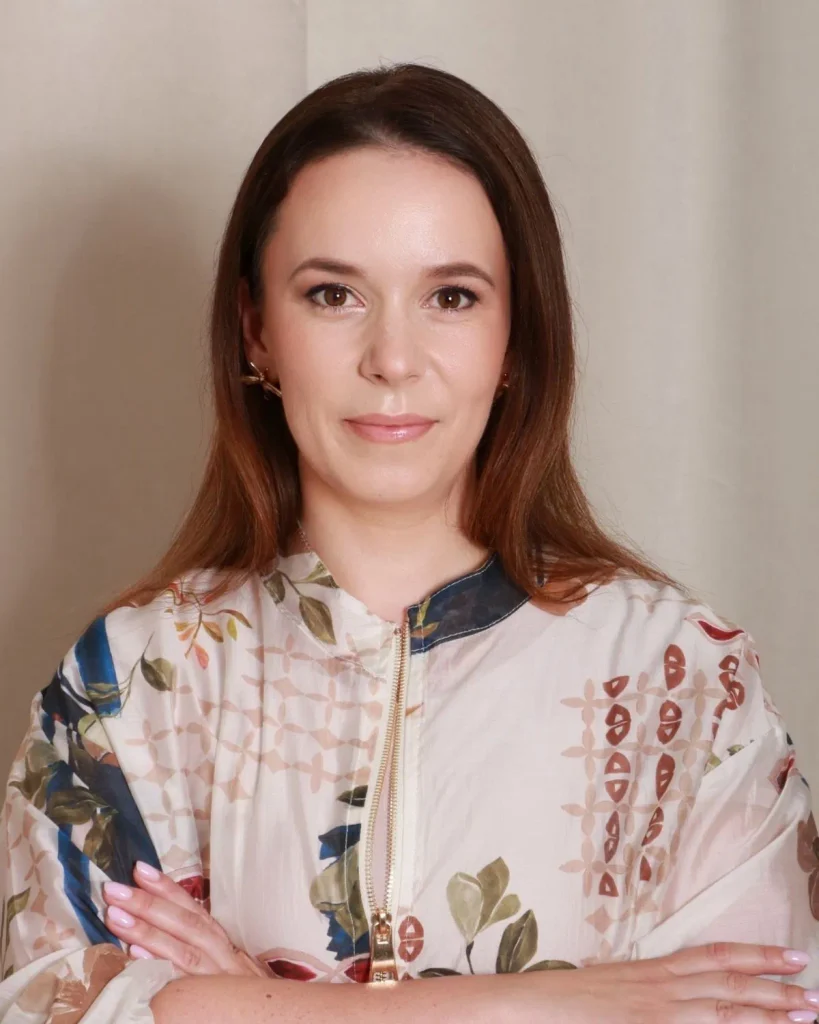
MEET YOUR EDUCATOR
Hi, I’m Monika Sadar, PhD.
I’m an esthetician and educator based in Slovenia, Europe. Before creating Skinstetika Academy, I spent years working in aesthetics and teaching cosmetic subjects.
What I eventually realized was that following a technically correct protocol did not always mean it was the right treatment for the skin in front of me.
So I started asking more questions.
Why does one client respond beautifully while another develops prolonged inflammation?
How much injury do we actually need to create?
How should barrier condition change our treatment?
Those questions changed the way I practice microneedling – and eventually, they changed the way I teach it.
Today, my approach to microneedling is simple:
Biology first. Protocol second.
I don’t want microneedling education to make you more afraid of treating skin.
Quite the opposite.
I believe deeply in this treatment. There is real evidence behind many of its indications, and the biology behind the response is fascinating.
But that biology deserves more than superficial training built around settings, depth charts, and generic protocols.
Great microneedling results require more than a pen and a protocol.
Ready to look at microneedling differently?
Join me for the free training:
Needle Depth Is Not Microneedling Expertise
Learn how better treatment decisions start with understanding the skin — not just the numbers on your device.
Free online training for licensed estheticians.
READY TO GO DEEPER?
This free training is just the beginning.
If this approach resonates with you, Microneedling PRO takes you much deeper into the science, technique, and clinical reasoning behind the treatment.
Inside the full program, we connect:
- wound healing and skin biology
- devices and needles
- treatment technique
- candidate assessment and contraindications
- ingredients and mesotherapy
- skin rejuvenation
- acne scars and hyperpigmentation
- hair loss and other indications
- clinical decision-making